 ☕️
☕️About Me
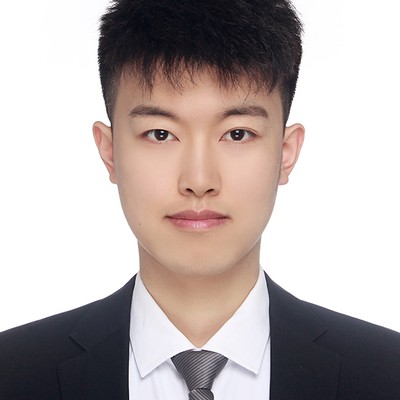
Xuhong Wang received his bachelor’s degree from Sichuan University in 2017 and his Ph.D. from Shanghai Jiao Tong University in 2022. He visited UC Berkeley (funded by the China Scholarship Council, 国家留学基金委) as a visiting scholar, and received the National Scholarship twice. He was appointed as an Adjunct Ph.D. Co-Supervisor at Shanghai Jiao Tong University, and as the Lead Principal Investigator (课题负责人, ¥10M) of a sub-project on “Science Intelligence (AI4S) Secure Service Middleware” under China’s “New Generation AI” National Major Project. He has published more than 40 papers, including work in Nature Machine Intelligence, ICLR, and ACL, with up to 260 citations for a single paper and an h-index of 15. He previously contributed to Ant Group’s graph computing system and the open-source Deep Graph Library (DGL, 15k stars). He is currently focused on next-generation trustworthy training infrastructure for agentic systems, and open-sourced Safactory, the first RL framework supporting joint game-theoretic adversarial training across multiple base models. He will continue to release open datasets and models. For a full publication list, please visit his Google Scholar profile. The research center has long-term openings for interns, jointly supervised PhD students, algorithm engineers, and researchers. Please reach out via email (wangxuhong@pjlab.org.cn).
- Mutli-model Large Language Model
- Next-generation Training Infrastructure
- Reinforcement Learning with Environment Feedback
PhD Artificial Intelligence
Shanghai Jiao Tong University
BSc Electronices Engineering
Sichuan University
[2026.6] Appointed as Adjunct PhD Co-Supervisor at Shanghai Jiao Tong University, focusing on AI safety and trustworthy AI systems, advancing joint talent development and frontier research between the PuJiang National Lab and academia.
[2026.6] Appointed as Lead Principal Investigator (课题负责人) of the “Science Intelligence (AI4S) Secure Service Middleware” sub-project under China’s “New Generation AI” National Major Project, with total funding of ¥10 million, building security infrastructure for scientific computing, drug discovery, and industry simulation.
[2026.5] Released the Safactory technical report, presenting a scalable agentic infrastructure for training trustworthy autonomous intelligence through a closed-loop pipeline spanning parallel simulation, trustworthy data, and autonomous evolution.
[2026.5] NaviMaster was accepted to ACL 2026 Main, unifying GUI and embodied navigation with a mixed-trajectory reinforcement learning framework for stronger cross-domain generalization.
[2026.4] Released Mokai, a full-stack agent security toolbox with 150+ tools spanning risk simulation, trusted data, and evolutionary defense for practical deployment.
[2026.4] Deliberative Searcher was accepted to ACL 2026 Oral, integrating certainty calibration and retrieval-based search into constrained reinforcement learning to improve reliability and calibration in open-domain QA.
[2026.4] From Coarse to Fine was accepted to ACL 2026 Findings, introducing the fine-grained WEval benchmark and WRL reward modeling framework for writing-centric generation with more precise requirement adherence.
[2026.3] Released DRIFT, later accepted to ACL 2026; the related paper proposes a dual-model framework that decouples knowledge extraction from reasoning through implicit fact tokens for efficient long-context inference, stronger robustness, and resistance to jailbreak prompts.
[2026.2] Released the AOT perceptual robustness project; the related paper introduces the AOT-SFT adversarial dataset and an attacker-defender self-play framework that continually improves multimodal perceptual robustness in visually complex scenes while reducing hallucinations.
[2026.2] TPRU was accepted to ICLR 2026 Oral, introducing a temporal and procedural understanding dataset plus an RL training pipeline that substantially improves lightweight multimodal models across robotics and GUI scenarios.
[2026.2] Released SafeVerse: a safe and trustworthy digital twin arena for embodied AI, turning ordinary videos into interactive, physics-aware 3D twin scenes within minutes, then extending them with attack-oriented editing and online agent evolution.
[2025.12] Released BioBridge: letting LLMs truly understand proteins without sacrificing general ability; the related paper was presented at BIBM 2025 (CCF-B), combining specialist protein reading with LLM reasoning to reach near-specialist performance on real biological tasks.
[2025.11] As the sole corresponding author, a LLM reward model based on uncertainty modeling was presented at EMNLP 2025 Main (Oral), which can significantly improve the content thinking quality of large model inference training.
[2025.9] Released a roadmap for Safe and Trustworthy Embodied AI with Xin Tan, Chaochao Lu, and Bowen Zhou, defining the field with ten core principles and an L1-L5 maturity model.
[2025.8] As the sole corresponding author, a distributed KV Cache architecture optimized for MoE models was released (PiKV: KV Cache Management System for Mixture of Experts).
[2025.8] Released the SOTA CoT-PRM model (VRPRM), achieving Test-time Scaling effect of Best-of-N approaching the theoretical limit value Pass@K, surpassing the SOTA model by 118% with only 1/8 of traning data.
[2025.7] As Core Lead, I led the knowledge enhancement and “Deliberation Search Mode” related modules of SafeWork-R1, with the results released at WAIC 2025.; the related paper presents the SafeLadder framework for jointly improving multimodal reasoning safety and general capability.
[2025.6] As the corresponding author, he guided the internship student to submit a paper, which was included in ICCV 2025. The relevant achievements have refreshed the SOTA of multi-modal retrieval, and it can provide the function of precise memory retrieval for embodied AI with 500,000 frames. demo
[2024.10] Join Safety and Trustworthy AI Center in the Shanghai AI Laboratory, responsible for knowledge enhancement for LLMs.
[2023.10] First author paper, using a dynamic graph network evolution engine for accelerated simulation of complex transportation systems.
[2022.10] Join Shanghai AI Laboratory, mainly responsible for AI security evaluation systems and multi-agent simulation platforms. I earned an ‘Excellent’ performance rating for two consecutive years.
[2022.3] Collaborative paper published in Nature Machine Intelligence.
[2020.2] Life’s first paper was published in Knowledge-Based Systems